
A Day in Sonargaon: Walking Through History and Culture
- Niharika Momtaz

- Mar 24
- 3 min read
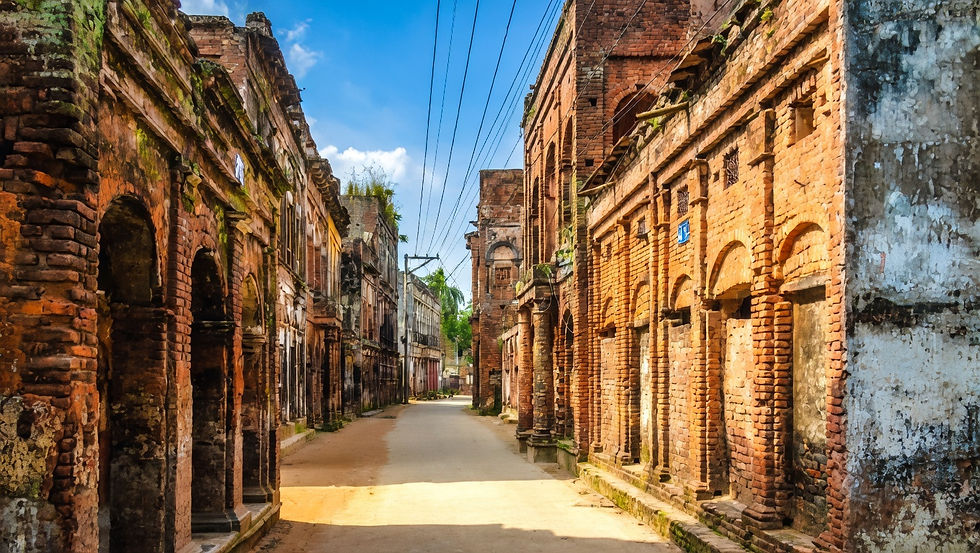
Sonargaon is just an hour's drive from Dhaka and feels more like a laid-back, outdoor story about Bengal's fascinating history than just a quick day trip. Once a busy river port and the heart of the famous muslin trade, this old capital of eastern Bengal now offers a peaceful yet lively experience, giving a glimpse into the power of the Sultanate, the grandeur of the Mughals, and the lives of merchants during colonial times. Wandering around half-ruined mansions, sun-drenched mosques, and small craft exhibits that still brim with rural Bangladeshi culture can be done in a single day.
From Dhaka to the former capital
The road to Sonargaon passes by the Narayanganj riverfront and the Raozan flyover, two cities that progressively give way to the rural rhythm of Narayanganj's periphery. The air shifts as you cross the Shitalakshya: fields, groups of homesteads, and the occasional ox-drawn cart replace the capital's heavy traffic. This change in tempo establishes the mood for the day, as though time itself has relaxed in anticipation of Sonargaon's layers of history.
The Museum of Folk Art and Crafts
The most gentle introduction to the spirit of the area is the Sonargaon Folk Art and Craft Museum, which is housed in the magnificent Boro Sardar Bari mansion and the renovated Sonargaon Museum complex. Terracotta dolls, brass and silver utensils, traditional musical instruments like ektara and dhol, and intricately embroidered nakshi kantha quilts are among the cabinets and displays that depict everyday rural life.
The museum is transformed into a lived-in cultural park with ponds and tree-lined lawns outside, where families enjoy picnics next to life-size boat and weaving loom models, blurring the distinction between exhibition and everyday memory.
A stroll around Panam Nagar
Panam Nagar is a quiet little street with about fifty old brick mansions that were left behind by Hindu cotton merchants back in the 19th century. It's just a short walk from the museum. The buildings have arched windows and floral designs, and their faded paint shows they've seen better days after years of rain and neglect.
You can see hints of Indo-Saracenic style, all while enjoying the shade of the trees above. The ghosts of export contracts and muslin invoices linger in the air between the balconies of this street, which is like walking into a partially erased ledger of colonial-era trade.
Tombs, mosques, and daily rhythms
Sonargaon's Goaldi Mosque was constructed under Sultan Alauddin Hussain Shah's rule. The day is anchored in Bengal's Islamic heritage by smaller but no less evocative sites outside the merchant quarter. Amidst grassy fields and trees, the Goaldi Mosque stands as a silent monument to pre-Mughal architectural grace with its single dome and terracotta decoration.
The tomb of Sultan Ghiyasuddin Azam Shah, which is close by, remembers Sonargaon's era as a seat of independent power, when this riverbank city hosted foreign envoys from China and other countries and minted its own coins. The medieval past is brought into the rhythm of a modern village in the afternoon as the tiny lanes surrounding these monuments fill with the subtle scents of street food and the chatter of neighborhood kids.
Concluding the day
The day's immersion is concluded with a straightforward roadside meal of fried fish, rice, and salad at a nearby restaurant as the light turns amber over the Shitalakshya. The peeling balconies at Panam, the calm courtyard of the Goaldi Mosque, and the folk-art-filled lanes of the museum all paint a vivid picture of Bengal's diverse identity. But the drive back to Dhaka feels a bit sudden, like you're closing a book halfway through a good chapter.
Spending a day in Sonargaon is really about taking a casual stroll through history, as if it were just a neighborhood you know well, where the culture hangs out in the dust on old bricks and the laughter by the ponds at dusk, not locked away in glass cases.


Comments