
Bagha Masjid: My Favorite Hidden Gem in Rajshahi
- Niharika Momtaz

- Apr 17
- 3 min read
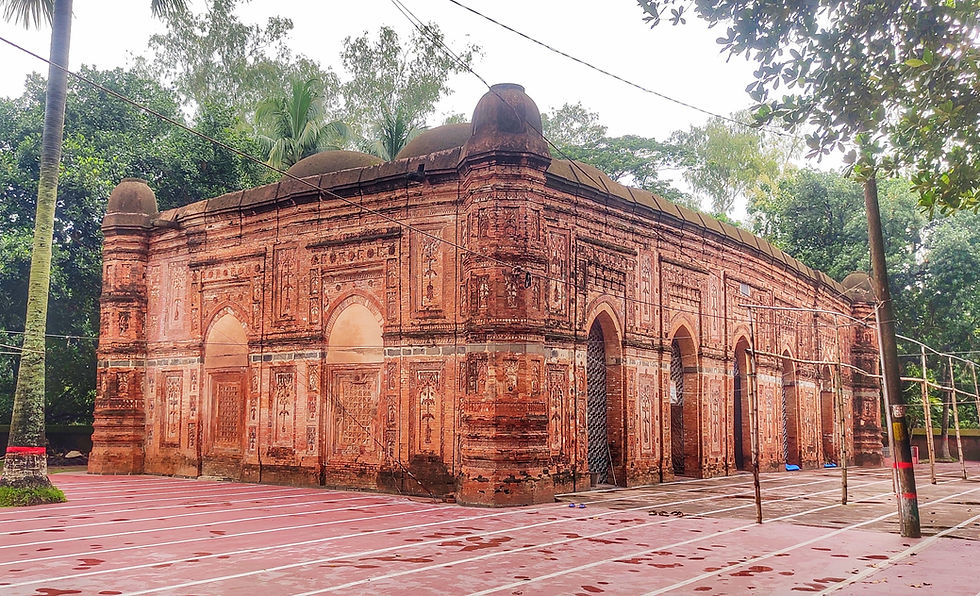
Hey, if you ever find yourself in Rajshahi and want to step away from the usual tourist spots, let me tell you about Bagha Masjid. Tucked away in the quiet village of Bagha, about 40 km southeast of the city, this beautiful old mosque feels like a time capsule. Built back in 1523–24 during the Bengal Sultanate, it’s one of those places that quietly takes your breath away with its intricate terracotta work and peaceful vibe. I went there on a random day trip, and honestly, it ended up being the highlight of my whole Rajshahi adventure.
The name “Bagha” apparently comes from an old story about a Sufi saint who tamed tigers (bagh means tiger in Bengali) in the area. Whether that’s true or not, the place has this gentle, almost magical feel. It was commissioned by Sultan Nasiruddin Nasrat Shah, and even after surviving earthquakes, monsoons, and hundreds of years, it still stands tall. The 1897 earthquake knocked down the domes, but local craftsmen carefully rebuilt it, and later renovations have kept its soul intact. Today it’s still an active mosque, so you’ll see locals coming for prayers while visitors wander around soaking it all in.
What really makes Bagha Masjid special is the craftsmanship. The mosque is roughly 75 feet long and 42 feet wide, topped with ten lovely domes and four corner towers that give it such graceful lines. But the real star is the terracotta decoration—those walls are covered in the most delicate patterns you’ll ever see: flowers, mango leaves, geometric designs, even tiny bells and chains.
The three mihrabs inside and the five arched doorways on the front are absolute masterpieces. It’s a perfect mix of Persian, Bengali, and Islamic styles, and honestly, it feels more like art than architecture. There used to be a smaller section for women worshippers, too. Out front there’s a huge historic pond (dighi) that turns into a bird paradise in winter—super calming to just sit there and watch.
Getting there is pretty easy and part of the fun. From Rajshahi city, it’s just a 50–60 minute drive through green countryside—grab a CNG or taxi and enjoy the ride past the old Sarda Police Academy. If you’re coming from Dhaka, take a bus or the Silk City train to Rajshahi and then hop in a local ride. Entry is free (though a small donation for upkeep is always nice), and the mosque is open pretty much all day. Just remember to dress modestly, take your shoes off, and keep things respectful during prayer times.
The best time to visit is between November and February when the weather is cool and pleasant. Summers can get roasting hot, and monsoon turns everything lush green (but bring an umbrella!). Pro tip: pair it with a stop at the Puthia temples nearby or check out the local saint’s mazar. And if you’re lucky enough to be there after Eid-ul-Fitr, don’t miss the Baghar Mela—there’s music, crafts, and such a joyful village atmosphere.
Look, Bagha Masjid isn’t flashy or crowded like some famous monuments. It’s quiet, authentic, and deeply beautiful in that understated Bangladeshi way. Whether you’re into history, architecture, photography, or just need a peaceful escape, this place hits different. It reminds you how rich our heritage really is.
If you’re planning a trip to North Bengal, add Bagha Masjid to your list—you won’t regret it. I still think about that peaceful courtyard and those incredible terracotta details months later. Go see it for yourself and tell me if it doesn’t leave you smiling, too.


Comments